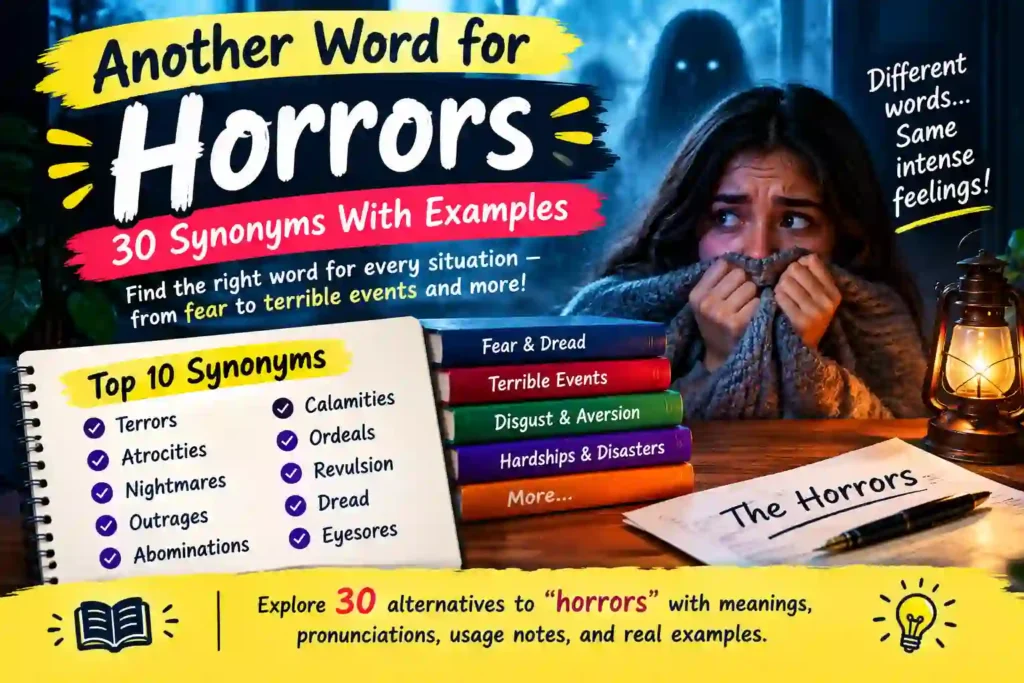
The closest everyday words for horrors are terrors, atrocities, nightmares, and dread. The best choice depends on meaning. Horrors can mean shocking events, strong fear, disgust, awful things, or scary stories.
Because horrors is plural, some alternatives below are plural, and some are feelings used in the singular.
Quick list: terror, dread, atrocities, nightmares, ordeals, abominations, revulsion, outrages, calamities, torments
Below are 30 alternatives with meanings, IPA, usage notes, and examples.
At a Glance: Horrors Synonyms and Related Alternatives
| Alternative | Part of Speech | Meaning | Register / Tone | Ideal Context |
| Terror | Noun | Extreme fear | Neutral | Danger, threats |
| Dread | Noun | Fear of what may come | Literary | Waiting for bad news |
| Atrocities | Noun | Cruel acts | Formal | War, news writing |
| Nightmares | Noun | Terrible experiences | Neutral | Personal ordeals |
| Ordeals | Noun | Long, painful experiences | Neutral | Survival, illness |
| Abominations | Noun | Hateful things | Formal | Moral outrage |
| Outrages | Noun | Shocking acts | Formal | Public anger |
| Revulsion | Noun | Strong disgust | Neutral | Repulsive sights |
| Monstrosity | Noun | Something hideous | Strong | Ugly buildings |
| Chiller | Noun | A scary story | Informal | Horror films |
Which Word Should You Use?
| If you want to… | Use | Why |
| Describe cruel acts in war | Atrocities | It sounds serious and factual. |
| Describe a feeling of fear | Terror | It is the direct match. |
| Describe fear of what is coming | Dread | It looks ahead. |
| Describe a very bad experience | Nightmares | It is vivid and everyday. |
| Describe disgust, not fear | Revulsion | It means wanting to turn away. |
| Describe a long, hard time | Ordeals | It shows endurance. |
| Describe scary films | Chillers | It is the casual word. |
Exploring the Multiple Meanings of Horrors
1. Strong Fear or Shock
- Meaning: A very strong feeling of fear, shock, or dread.
- Explanation: It is usually uncountable, so the plural is less common here.
- Example: She woke up filled with horror.
2. Terrible Events
- Meaning: Shocking, cruel, or distressing things that happen.
- Explanation: This is the most common plural use. It names the events, not the reaction.
- Example: Survivors spoke about the horrors of war.
3. Intense Dislike
- Meaning: A strong aversion to something.
- Explanation: It is closer to loathing than fear and often appears in a horror of.
- Example: He has a horror of being late.
4. Awful Things, People, or Stories
- Meaning: Something ugly, badly behaved, or meant to frighten.
- Explanation: It is informal. Little horrors is playful, and horrors can mean scary films.
- Example: The twins can be little horrors at bedtime.
Sources: Merriam-Webster; Britannica Dictionary; Wordsmyth; Webster’s New World via YourDictionary.
Analyzing 30 Horrors Alternatives in Detail
Some alternatives are close synonyms, while others only match one sense, and each Usage note says which.
Group 1: Fear and Alarm
1. Terror
IPA: US /ˈtɛrər/ · UK /ˈtɛrə/
Definition: Very strong fear.
- Usage: Closest match for the feeling of horror, with more focus on danger.
- Example: The children screamed in terror.
2. Dread
IPA: /drɛd/ (US and UK)
Definition: Great fear of what may happen.
- Usage: Related word. It looks ahead, while horror reacts to shock.
- Example: She felt dread as the phone rang.
3. Fright
IPA: /fraɪt/ (US and UK)
Definition: A sudden feeling of fear.
- Usage: Milder than horror. It suits a quick scare.
- Example: The loud bang gave us a fright.
4. Panic
IPA: /ˈpænɪk/ (US and UK)
Definition: Sudden fear that stops clear thinking.
- Usage: Related word. It stresses loss of control.
- Example: Panic spread through the crowd.
5. Dismay
IPA: /dɪsˈmeɪ/ (US and UK)
Definition: Worried shock at something bad.
- Usage: Weaker. Use it when horror sounds too strong.
- Example: To my dismay, the file was gone.
Group 2: Disgust and Dislike
6. Revulsion
IPA: /rɪˈvʌlʃən/ (US and UK)
Definition: Sudden, strong disgust.
- Usage: Matches the disgust side of horror, without fear.
- Example: He turned away in revulsion.
7. Abhorrence
IPA: US /æbˈhɔːrəns/ · UK /əbˈhɒrəns/
Definition: Extreme hatred or disgust.
- Usage: Formal. It shares a Latin root with horror.
- Example: The town expressed abhorrence of the crime.
8. Loathing
IPA: US /ˈloʊðɪŋ/ · UK /ˈləʊðɪŋ/
Definition: Intense dislike.
- Usage: Fits a horror of something. It means hatred, not shock.
- Example: She stared at the cold soup with loathing.
9. Repugnance
IPA: /rɪˈpʌɡnəns/ (US and UK)
Definition: Strong distaste, often moral.
- Usage: Formal. It suits writing about ethics.
- Example: He felt repugnance at cheating.
10. Aversion
IPA: US /əˈvɜːrʒən/ · UK /əˈvɜːʃən/
Definition: A strong dislike.
- Usage: A milder, related word.
- Example: She has an aversion to crowds.
Group 3: Shocking Acts and Events
11. Atrocities
IPA: US /əˈtrɑːsətiz/ · UK /əˈtrɒsɪtiz/
Definition: Extremely cruel acts.
- Usage: Closest match for horrors as terrible events. It is formal.
- Example: The report described the atrocities of the war.
12. Abominations
IPA: US /əˌbɑːmɪˈneɪʃənz/ · UK /əˌbɒmɪˈneɪʃənz/
Definition: Things that cause disgust or moral hatred.
- Usage: Strong and formal, often literary.
- Example: The old tale describes abominations beneath the castle.
13. Outrages
IPA: /ˈaʊtreɪdʒɪz/ (US and UK)
Definition: Shocking acts that cause public anger.
- Usage: It stresses the anger people feel.
- Example: The paper listed the regime’s outrages.
14. Nightmares
IPA: US /ˈnaɪtmɛrz/ · UK /ˈnaɪtmeəz/
Definition: Terrible experiences.
- Usage: Figurative and everyday.
- Example: The flood turned the year into a nightmare.
15. Calamities
IPA: US /kəˈlæmətiz/ · UK /kəˈlæmɪtiz/
Definition: Sudden, serious disasters.
- Usage: Related word. It names the disaster, not the shock.
- Example: Fire and flood were that decade’s calamities.
Group 4: Hardship and Suffering
16. Ordeals
IPA: US /ɔːrˈdiːlz/ · UK /ɔːˈdiːlz/
Definition: Long, painful experiences.
- Usage: Good for horrors a person lived through.
- Example: The hikers described their ordeals.
17. Torments
IPA: US /ˈtɔːrmɛnts/ · UK /ˈtɔːmɛnts/
Definition: Severe suffering.
- Usage: Strong and literary. It suggests ongoing pain.
- Example: He spoke of the torments he endured.
18. Afflictions
IPA: /əˈflɪkʃənz/ (US and UK)
Definition: Causes of pain or distress.
- Usage: Related word. It fits illness and hardship.
- Example: The village suffered many afflictions.
19. Agonies
IPA: /ˈæɡəniz/ (US and UK)
Definition: Extreme pain.
- Usage: Related word. It describes pain, not shock.
- Example: She felt the agonies of waiting.
20. Miseries
IPA: /ˈmɪzəriz/ (US and UK)
Definition: Conditions of great unhappiness.
- Usage: Softer than horrors. It suits poverty.
- Example: The book describes the miseries of the workhouse.
Group 5: Awful Things and Troublemakers
21. Monstrosity
IPA: US /mɑːnˈstrɑːsəti/ · UK /mɒnˈstrɒsəti/
Definition: Something hideous or shocking.
- Usage: Matches horror as an awful thing.
- Example: Locals called the tower a monstrosity.
22. Eyesore
IPA: US /ˈaɪsɔːr/ · UK /ˈaɪsɔː/
Definition: Something very ugly.
- Usage: Informal. It covers only the ugly side.
- Example: The old factory is an eyesore.
23. Rascal
IPA: US /ˈræskəl/ · UK /ˈrɑːskəl/
Definition: A mischievous person, often a child.
- Usage: Related to little horrors, but milder.
- Example: Those rascals hid my keys.
24. Imp
IPA: /ɪmp/ (US and UK)
Definition: A mischievous child.
- Usage: A playful, related word.
- Example: The little imp drew on the wall.
25. Menace
IPA: /ˈmɛnəs/ (US and UK)
Definition: A person or thing that causes danger or trouble.
- Usage: Related word. It can be serious or playful.
- Example: Careless drivers are a menace.
Group 6: Scary Stories and Nervous Feelings
26. Chiller
IPA: US /ˈtʃɪlər/ · UK /ˈtʃɪlə/
Definition: A story or film meant to scare.
- Usage: Matches the horror-story sense. It is informal.
- Example: The festival opened with a classic chiller.
27. Spine-chiller
IPA: US /ˈspaɪn ˌtʃɪlər/ · UK /ˈspaɪn ˌtʃɪlə/
Definition: A very frightening story or film.
- Usage: A more vivid version of chiller.
- Example: The book is a real spine-chiller.
28. Shocker
IPA: US /ˈʃɑːkər/ · UK /ˈʃɒkə/
Definition: Something that gives an unpleasant surprise.
- Usage: Related word. It stresses surprise.
- Example: The ending was a shocker.
29. Creeps
IPA: /kriːps/ (US and UK)
Definition: A feeling of fear or disgust.
- Usage: Informal. It fits the horrors as a nervous feeling.
- Example: That empty hallway gives me the creeps.
30. Heebie-jeebies
IPA: /ˌhiːbi ˈdʒiːbiz/ (US and UK)
Definition: A state of nervous fear.
- Usage: Very informal and playful.
- Example: Spiders give me the heebie-jeebies.
Sources: Merriam-Webster; Britannica Dictionary; Wordsmyth; Etymonline. Definitions of the alternatives follow standard dictionary senses.
Horror vs. Terror vs. Dread
| Word | Focus | Example |
| Horror | Shock or disgust | She looked on in horror. |
| Terror | Fear of danger | They froze in terror. |
| Dread | Fear of what is coming | He felt dread before the results. |
Sources: Merriam-Webster; Wordsmyth.
Horrors and Opposite/Paired Word Pairs
| Word | Paired Word | Note |
| Horrors | Delights | A contrast when horrors means awful things. |
| Horror | Relief | A contrast for the feeling. |
There is no single perfect antonym, so choose the contrast by sense. These are contrasts, not strict dictionary antonyms.
Sources: Wordsmyth (antonyms of horror).
Common Word Partners of Horrors
| Pattern | Common Partners | Example |
| Adjective + horrors | unspeakable, untold, unimaginable | They survived unspeakable horrors. |
| Horrors of + noun | war, famine, slavery | The film shows the horrors of war. |
| Verb + horrors | witness, face, relive | He refused to relive the horrors. |
Sources: Britannica Dictionary; Merriam-Webster.
Idiomatic Phrases Featuring Horrors
1. Horror of horrors
- Meaning: Used humorously to point out something shocking.
- Example: Horror of horrors, he wore socks with sandals.
2. The horrors
- Meaning: An old-fashioned phrase for a fit of nervousness or panic.
- Example: The thought of speaking in public gave her the horrors.
3. Chamber of horrors
- Meaning: A place full of horrible things, often used humorously.
- Example: After the party, the kitchen was a chamber of horrors.
Sources: Britannica Dictionary; Webster’s New World via YourDictionary; Wiktionary.
Word Formation of Horrors
Etymology & Structure
Horror comes from Old French horror and Latin horror, meaning a shudder. The Latin word comes from horrere, to bristle with fear. Horrors is the plural.
Date and History
Etymonline dates the disgust sense to the early 1300s and the dread sense to the late 1300s. The film genre dates to 1934.
Word Class Variations
- Noun: horror, horrors
- Adjective: horror (as in horror film), horrible, horrific, horrified
- Verb: horrify
- Adverb: horribly, horrifically
Sources: Etymonline; Merriam-Webster.
Common Word-Choice Mistakes
- The horror of war were terrible: use The horrors of war were terrible.
- She felt a horrors: use She felt horror.
- I have horror to spiders: use a horror of spiders.
- The terrors of the war for events: use horrors or atrocities.
- Atrocities of homework: use nightmares for casual hardship.
- Revulsion for fear alone: use terror or dread.
Frequently Asked Questions
What is the closest synonym for horrors?
Terrors for the feeling, and atrocities for terrible events.
What is a formal alternative?
Atrocities, abominations, and outrages.
What is a casual alternative?
Nightmares, creeps, and heebie-jeebies.
What is the opposite of horrors?
There is no single opposite. Delights and relief are common contrasts.
Is horror countable?
It can be. It is uncountable for the feeling but countable for awful events.
What is the difference between horror and terror?
Horror includes shock or disgust. Terror is fear of danger.
Can horrors mean horror films?
Yes, as in old black-and-white horrors.
What does the horrors mean?
It is an old, informal phrase for a fit of nervousness.
What is a literary alternative?
Torments, abominations, and dread.
Which word fits suffering after a war?
Ordeals for the experience, and atrocities for the cruelty.
Conclusion
The closest alternatives to horrors are terror and dread for the feeling, and atrocities and nightmares for terrible events.
Context decides the best word. Some words stress fear, some stress disgust, and some name the events themselves.
To choose well, first decide whether you mean a feeling, an event, an awful thing, or a story. Then match the tone of your writing.

Hi, I’m HAROON ,founder of LifeLoomer.com, I started LifeLoomer with one belief: the internet is full of answers, but not enough understanding. So I write guides that actually explain things the meanings behind everyday words, the small habits that make life better, and the how-tos nobody taught us.
Everything I publish is researched, written in plain words, and tested against one question: will this genuinely help someone today?
Thanks for being here. I hope you leave a little wiser than you came.